
U.S. President Donald Trump: "I Don't Think Netanyahu Ever Wanted To Make Peace"
Updated: Nov 5, 2025

PART XIV / XIV
“I stopped [Netanyahu] in the middle of a sentence. I said, ‘[Netanyahu], you don’t want to make a deal. Do you?’ And he said, ‘Well, uh, uh, uh’ – and the fact is, I don’t think [Netanyahu] ever wanted to make a deal.”
U.S. President Donald Trump, 12/13/2021
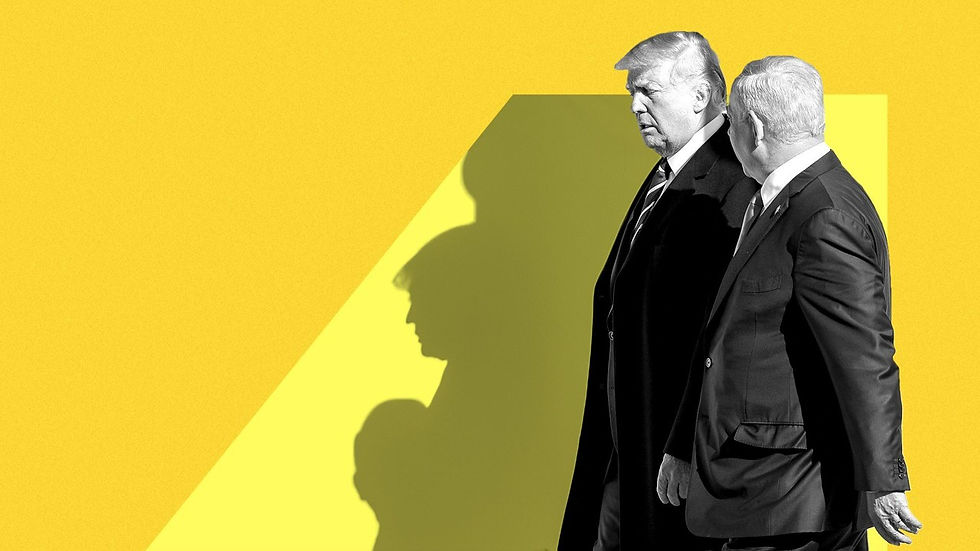
“The first person that congratulated [Biden] was Bibi Netanyahu, the man that I did more for than any other person I dealt with. … Bibi could have stayed quiet. He has made a terrible mistake,” Trump said.
Netanyahu defended his actions in congratulating Biden, saying he appreciated the “strong alliance between Israel and the U.S. and therefore it was important for me to congratulate the incoming President.”
In an interview published December 13, 2021, Trump said that he believes Israeli Prime Minister Benjamin Netanyahu never had any desire to establish peace with the Palestinians during his 12-year term in power.
“I don’t think Bibi ever wanted to make peace,” Trump said, using Netanyahu’s nickname. “I think he just tapped us along. Just tap, tap, tap, you know?”
“My whole life is deals. I’m like one big deal. That’s all I do, so I understand it,” said Trump. “And after meeting with Bibi for three minutes… I stopped Bibi in the middle of a sentence. I said, ‘Bibi, you don’t want to make a deal. Do you?’ And he said, ‘Well, uh, uh, uh’ – and the fact is, I don’t think Bibi ever wanted to make a deal.”
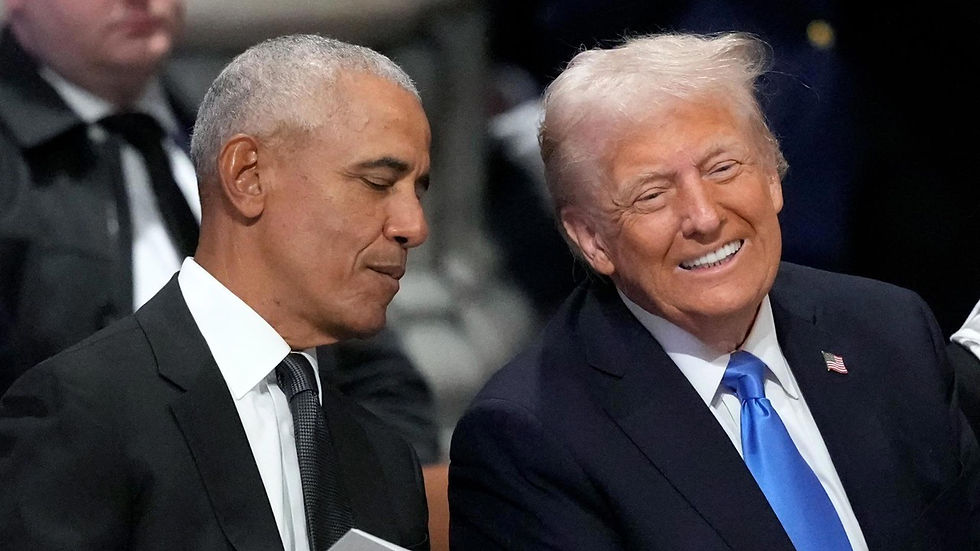
Trump apparently reached the same conclusion that two of his predecessors – former Presidents Clinton and Obama – had reached when they worked with Netanyahu on reaching a two-state solution. In a 2014 interview, Clinton agreed that Netanyahu was probably “not the guy” who would make peace with Palestine.
Netanyahu and Obama’s relationship was known to be rather strained due to their stark ideological differences. Netanyahu was also strongly opposed to Obama’s work in establishing a nuclear agreement with Iran.
Trump presented a peace plan in January 2020 that was the most favorable proposal for Israel that any U.S. president had made since the Madrid peace conference in 1991. During the 2016 presidential election campaign, Trump spoke several times about his eagerness to make “the mother of all deals” to end the Israeli-Palestinian conflict.
“I have been told by everybody that it’s not doable. Sheldon Adelson said it’s not doable,” Trump said, referring to the late Republican mega-donor, whom he referenced repeatedly in our interview when discussing his Middle East policies.
“The hatred is so great between the Palestinians and the Israelis. They learned from the first day to hate each other, especially the Palestinians toward Israel,” Trump claimed. “And Sheldon was a great deal-maker. He said it’s impossible.”
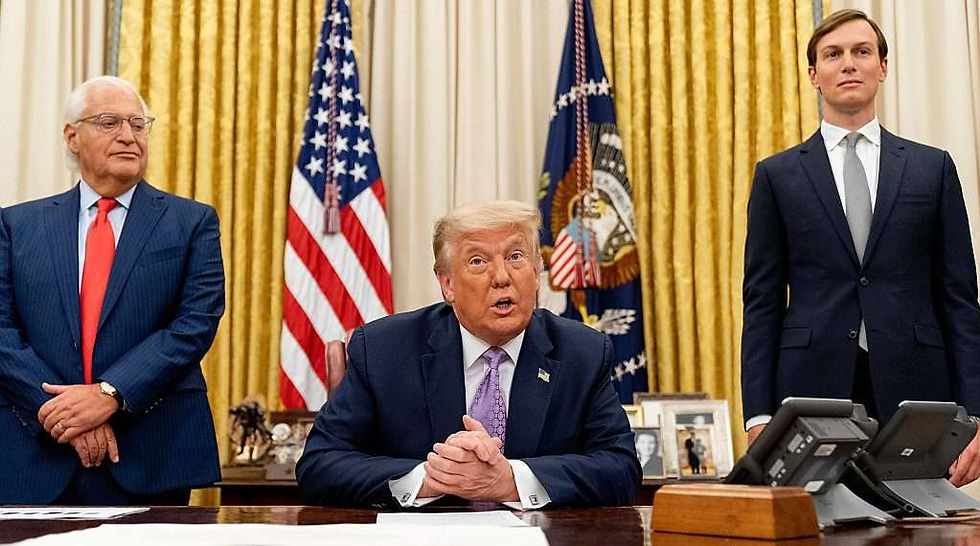
Nevertheless, Trump appointed his son-in-law Jared Kushner to lead the White House “peace team.” Kushner wasn’t even aware that he’d been tapped for the job until Trump told the New York Times during the presidential transition.
“I figured, look, you know the expression, ‘What do you have to lose?’” Trump told me.
Trump said that at an early stage of his presidency, he realized that Netanyahu would be a bigger obstacle to peace than Palestinian President Mahmoud Abbas.

“I thought he was terrific,” Trump said on Abbas, reflecting on their “great” first meeting. “He was almost like a father. Couldn’t have been nicer. I thought he wanted to make a deal more than Netanyahu.”
Abbas told Trump that he thought they could make a deal. Netanyahu urged Trump to wait.
The reason, Trump thought, was domestic Israeli politics.
In December 2017, Trump undermined his own efforts toward a peace deal when he recognized Jerusalem as Israel’s capital and said U.S. Embassy would move there.
Kushner’s team worried that could be a bump on the road to any agreement with Palestinians. It turned out to be far more serious, becoming the worst crisis between U.S. and Palestinians in at least 15 years.
Abbas severed all ties with the Trump administration except on security issues. Trump retaliated by gradually cutting nearly all U.S. financial support to the Palestinians.
Trump’s decision was mainly political, to fulfill a campaign promise and prove to his evangelical base that he’d take steps no other president would.
But during the interview, he struggled to explain why he continually took steps to benefit Netanyahu and harm Abbas, even though he’d initially found Abbas more cooperative.
One explanation he offered was that he’d always been told the Israelis wanted peace, not the Palestinians.
Trump also accused Abbas of offering “hugs and kisses” and “wonderful communication” behind closed doors, but criticism in public.
“When he went back home, he didn’t say the right things. He said much more warlike things than what he said to my face. … Maybe he felt, politically, it was good,” Trump said, reflecting that he still liked Abbas based on their early interactions.
Much of Abbas’ inflammatory rhetoric came after Trump’s Jerusalem decision. In a speech in January 2018, Abbas cursed Trump and said in Arabic, “May your house be destroyed.”
Asked whether he could understand the Palestinian anger, Trump said, “We were going to do something for them in a different part of Jerusalem. I said, ‘Look, Israel just gained a point. The next point is going to be theirs. They’re going to get something very big that they want.’ I let them know that.”
Trump also conceded that cutting aid to the Palestinians had been effective in bringing them back to the negotiating table. “These are hardened people,” he said.
When Trump finally revealed his Middle East peace plan in January 2020, after more than a year of delays due to long-running political crisis in Israel, the Palestinians rejected it outright and boycotted the ceremony.


Trump invited both Netanyahu and his political rival Benny Gantz to Washington, hoping they’d both back the deal.
Trump and Gantz hit it off. “I thought he was great. A really impressive guy. In my opinion, it would have been much easier to make a deal with the Palestinians [with Gantz] than with Netanyahu. The Palestinians hate Netanyahu. … They did not hate Gantz. It’s a big factor.”
Netanyahu was upset about the timing of Trump’s announcement (just before yet another Israeli election) and that Gantz got an Oval Office meeting. Still, he couldn’t outright say no to Trump.
Instead, Netanyahu decided to use Trump’s plan as a cover to annex parts of the Israeli-occupied West Bank ahead of the elections – an explosive proposal that would violate international law, but potentially provide Netanyahu an electoral landslide.

Trump’s ambassador to Israel, David Friedman, supported Netanyahu’s annexation push and even said publicly after the White House ceremony that Israel could annex right away.
But Trump was irritated by Netanyahu’s speech at the ceremony.
A former senior White House official told me Netanyahu “turned the president into a potted plant with a campaign speech instead of reaching out to the Palestinians.”
After Netanyahu departed, Trump asked his advisers, “What the hell was that?”
When Netanyahu announced the annexation plan later that same day, blindsiding the White House, Trump was livid. “I got angry and I stopped it because that was really going too far,” Trump said.

Kushner called Friedman into his office and gave him a dressing down, saying this plan was not what the president wanted.
Kushner then made Friedman cross Pennsylvania Avenue to the Blair House to deliver the bad news to Netanyahu, who was celebrating with his senior advisers.
Netanyahu tried to fight it, but within 24 hours, both he and Friedman were walking back everything they had said on annexation. Netanyahu blamed “miscommunication.”
THE PEACE PROCESS THROUGH U.S. ADMINISTRATIONS
Former U.S. President Joe Biden, Israeli Prime Minister Benjamin Netanyahu Meeting, 9/20/2023
Former U.S. President Joe Biden, Israeli Prime Minister Benjamin Netanyahu Meeting, 10/18/2023
Former U.S. President Joe Biden, Israeli Prime Minister Benjamin Netanyahu Meeting, 7/25/2024
Former U.S. Vice President Kamala Harris, Israeli Prime Minister Benjamin Netanyahu Meeting, 7/25/2024
U.S. President Donald Trump, Israeli Prime Minister Benjamin Netanyahu Meeting, 2/4/2025
U.S. President Donald Trump, Israeli Prime Minister Benjamin Netanyahu Meeting, 4/7/2025
2025 NATO Summit, U.S. President Donald Trump, NATO Secretary General Mark Rutte, 6/25/2025


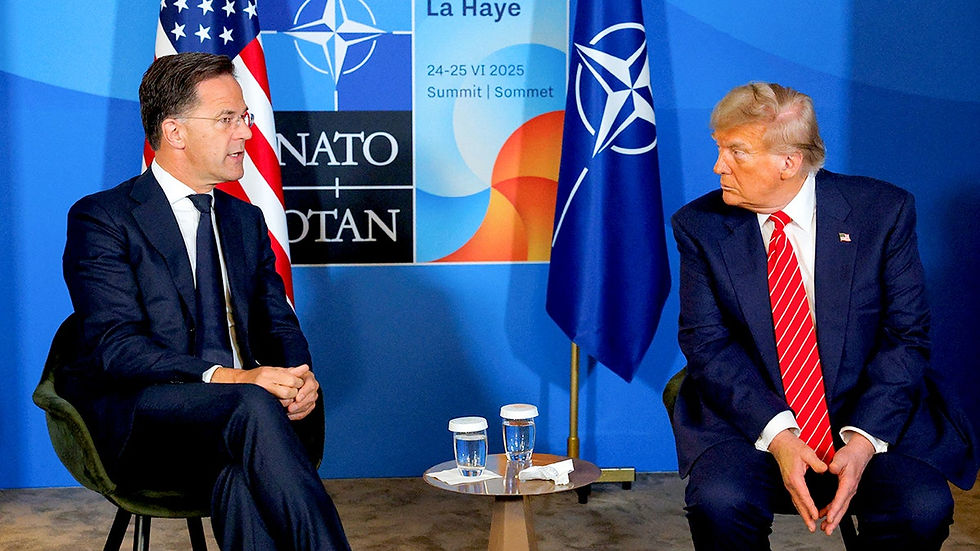


“Trump was right.”
Mark Rutte
Former Netherlands Prime Minister, 01/17/2024
NATO Secretary General, 6/25/2025





Comments